Breathwork for stress works best when it is gentle, brief, and easy to stop. If daily pressure leaves you tense or distracted, a few minutes of comfortable breathing can offer a practical pause, not a guaranteed cure. The safest starting point is to notice your natural breath, then slow it slightly without forcing depth or holding.
Key takeaways for a safer practice
- Use a comfortable pace, not the deepest breath you can manage.
- Try a slightly longer, unforced exhale if it feels pleasant.
- Begin seated, for two to five minutes, and breathe normally if discomfort starts.
- Avoid intense, rapid breathing or long breath holds when practicing alone.
- Use the pause to return to thoughtful action, not to avoid a difficult conversation or decision.
Why can intentional breathing help with stress?
Gentle breathing gives attention a simple, immediate anchor. Instead of trying to force your thoughts to stop, you notice one sensation, such as air moving through the nose or the ribs widening, and return to it when attention wanders.
For some people, slowing a hurried rhythm can also feel settling. Responses differ, though: focusing on breathing may feel uncomfortable or increase anxiety for others. Treat the exercise as an experiment in awareness, not a measure of discipline or proof that you are calm.
This approach connects inner awareness with what happens next. After a short pause, you may be better able to choose a considerate reply, ask for help, or take one manageable step. That is one way to turn everyday stress into calm action.
How to try a gentle breathing exercise
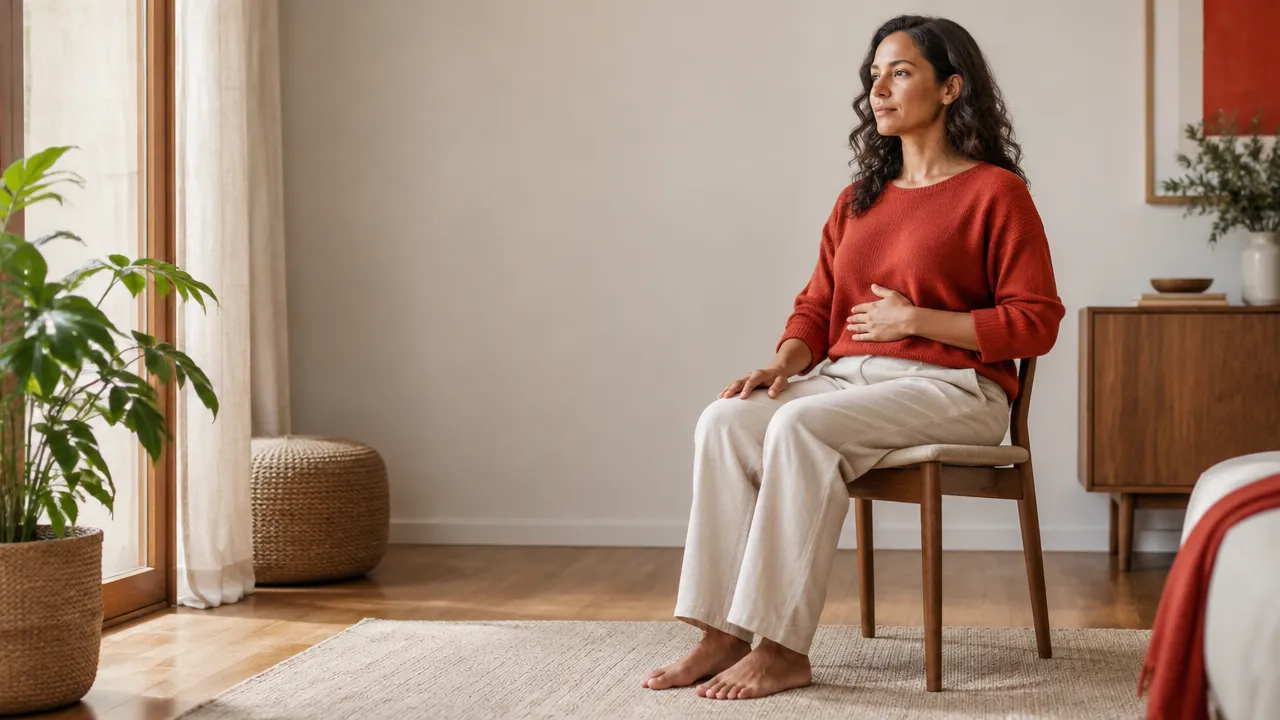
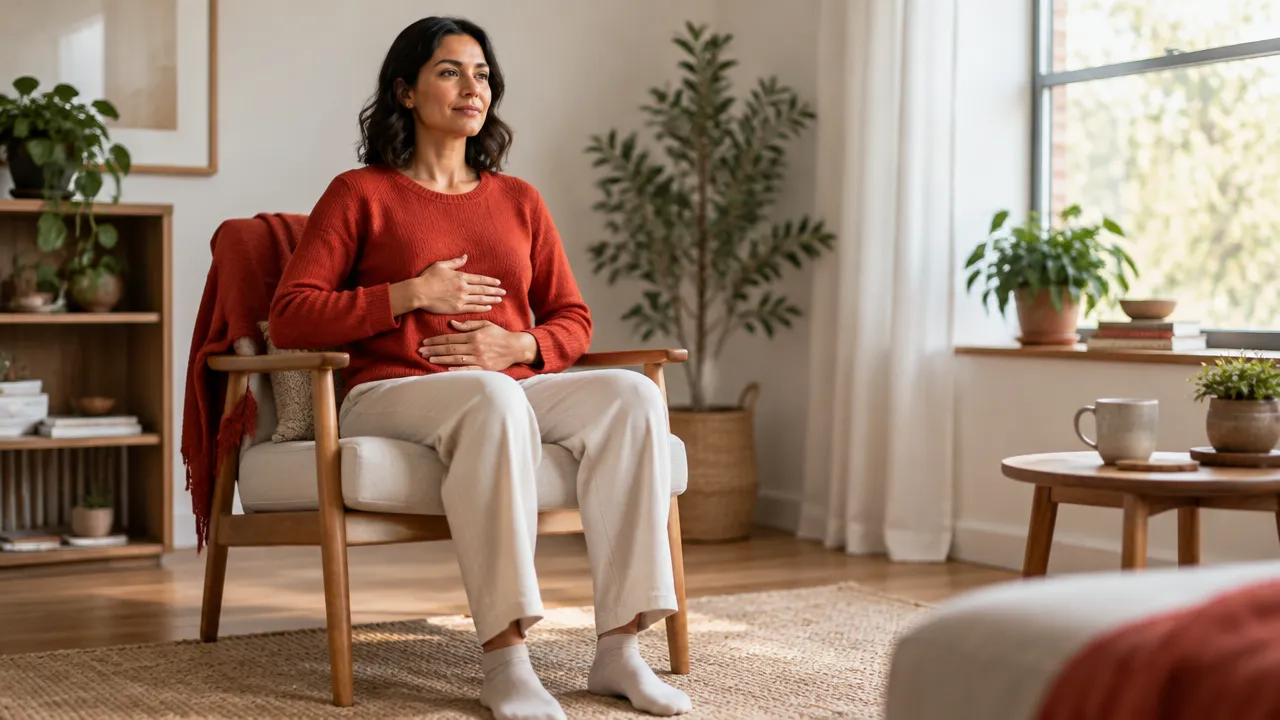
Start seated with your feet supported, or lie down if that feels more comfortable. Keep your jaw and shoulders relaxed. There is no need to breathe into your maximum capacity.
- Notice your normal breathing for several cycles.
- Let the next inhale arrive gently through your nose, if comfortable.
- Allow the exhale to last a little longer than the inhale, without pushing.
- Continue for two to five minutes, returning attention to the breath when it wanders.
- Finish by noticing the room, your posture, and what you want to do next.
If counting helps, try an easy three-count inhale and four-count exhale. Change the counts or drop them entirely if you feel strain. The goal is a tolerable rhythm, not reaching a particular number.
Which breathing pattern is a sensible place to start?
For stress, choose the simplest pattern that feels comfortable. A technique is not more effective just because it includes more steps or longer holds.
| Pattern | What it involves | Beginner consideration |
|---|---|---|
| Natural observation | Notice the breath without changing it. | A low-pressure first step if counting feels distracting. |
| Easy extended exhale | Let the exhale run slightly longer than the inhale. | Keep both parts smooth, with no straining or pause requirement. |
| Box breathing | Use equal intervals for inhaling, holding, exhaling, and holding again. | Skip the holds if they feel uncomfortable; equal timing is optional. |
| Fast or forceful breathing | Use repeated rapid, deep breaths or extended holds. | Not a gentle starting practice; seek qualified guidance rather than experimenting alone. |
When should you stop or get guidance?
Stop, release any counting, and return to ordinary breathing if you feel dizzy, tingly, unusually short of breath, panicky, or physically uncomfortable. Sit or lie somewhere safe until you feel steady. Do not practice a technique that could make you faint while driving, standing in a risky place, or in water.
People with heart or lung conditions, a history of fainting, or symptoms that worsen with focused breathing can ask a healthcare professional for individualized advice. The US overview of relaxation techniques notes that these practices are generally considered safe for healthy people, but may sometimes cause increased anxiety or other unwanted experiences. More intense methods deserve added caution and qualified supervision.
If focusing inward feels difficult, shift attention outward: notice colors in the room, feel your feet against the floor, or listen to nearby sounds. This kind of somatic awareness of body and mind can include noticing discomfort without forcing it to change.
How to make the practice useful in daily life
Attach a short breathing pause to a routine you already have, such as sitting down before a meeting or arriving home. Two minutes can be enough to check in. You can also breathe normally while asking: What am I feeling? What does this situation need from me? What action would reduce harm or help?
Frequency matters less than whether the practice is comfortable and useful. Try it once a day for a week, then decide whether it helps you respond with more care. If it becomes another source of pressure, shorten it or stop. Small moments of daily awareness can support meaningful choices without requiring a perfect routine.
Breathing does not resolve the cause of every stressor. It can create a brief space to notice what is happening and choose a next step, including setting a boundary, repairing a conversation, or seeking support.
Frequently asked questions
Why can breathwork help with stress?
A comfortable, slightly slower breathing rhythm can give attention a steady focus and may help the body settle. The effect varies, and breathing is not a cure for ongoing stress or anxiety. Keep the breaths easy rather than unusually deep, and stop if the exercise makes you feel worse.
What is the most relaxing breathing exercise?
For many beginners, the most relaxing pattern is gentle breathing with an easy, unforced exhale that lasts a little longer than the inhale. There is no single best count. Try a comfortable rhythm without holding your breath, and return to normal breathing if you feel strained or lightheaded.
Who should avoid breathwork?
People with heart or lung conditions, a history of fainting, or symptoms that worsen during breathing exercises should ask a healthcare professional what is appropriate for them. Fast, forceful breathing and prolonged holds deserve extra caution. Stop any practice that causes dizziness, tingling, chest discomfort, or panic.
How often should you practice breathwork?
Start with a few minutes once a day, or use a brief session during a stressful transition. Regular, comfortable practice matters more than duration. If you notice discomfort, shorten the session or stop. A breathing exercise should support daily life, not become another task you feel pressured to complete.
Is it better to inhale longer or exhale longer?
A slightly longer exhale may feel calming to some people, but it is not a rule or a test. Let the inhale stay easy and avoid forcing the exhale to meet a count. If extending either part creates strain, breathe naturally instead.